Amy Wensley: The Investigation After the Scene Was Lost
Coffee and Crime AU | Deeper Into The Case Exclusive
Companion article to the bonus episode: “Amy Wensley: The Investigation After the Scene Was Lost”
Before You Read
This article is a factual companion to the Coffee and Crime AU bonus episode examining the investigation into Amy Wensley’s death. It is based on publicly reported coronial evidence, court reporting, and broadcast journalism. It does not attempt to determine whether Amy died by suicide or homicide. Its purpose is to explain why the handling of the scene became one of the most debated aspects of the case.
The Sentence That Changed Everything
There is a sentence that appears repeatedly in discussions about Amy Wensley’s death: 'The scene had already changed.”
Those six words sit at the centre of the controversy surrounding the investigation.
They do not tell us how Amy died. They tell us something equally important: that later investigators were forced to examine a scene that was no longer preserved exactly as it had been at the critical moment.
When detectives entered the bedroom on the night of 26 June 2014, several attending officers had already expressed concerns about the circumstances. They were not saying they knew a crime had occurred. They were saying the scene required careful forensic examination before any conclusion was reached.
That distinction matters.
What Is a Protected Forensic Area?
A Protected Forensic Area (PFA) is one of the most important safeguards in a death investigation.
Once declared, access is tightly controlled, objects are not moved unnecessarily, and forensic specialists can examine the scene before contamination occurs.
Think of it as pressing pause on a moment in time.
Lifting a PFA does not mean investigators stop investigating. It means the scene is no longer receiving the highest level of forensic protection.
In Amy’s case, the PFA was lifted after detectives formed the view that the scene appeared consistent with suicide.

The Disagreement That Emerged That Night
One of the most striking features of the coronial evidence was that officers present at the same scene described different impressions.
Evidence reported from the inquest indicated that several uniformed officers remained uneasy about the scene and believed further forensic examination was warranted.
Detectives Tony Kirkman and Darren Weidmann maintained that the scene appeared consistent with suicide.
Detective Kirkman later accepted that the decision to lift the PFA was ultimately his.
That evidence is significant because it demonstrates that there was not unanimous agreement among attending officers from the outset.
The Position of Amy Wensley’s Right Hand
A major point of disagreement concerned the position of Amy’s right hand, which several officers described as being trapped beneath her body.
Some officers considered that difficult to reconcile with a self-inflicted shotgun wound.
Detective Kirkman suggested possible explanations, including movement caused by the force of the shot or later disturbance of the body.
This was not a minor technical issue. It related directly to the central forensic question of whether Amy could have fired the weapon herself.

The Trajectory Debate
Another important issue involved the trajectory of the shot.
Detective Kirkman initially formed an impression that the blood pattern suggested a low-to-high trajectory.
Later specialist bloodstain analysis reportedly indicated a horizontal trajectory. At the inquest, Detective Kirkman acknowledged that his earlier assumption would have been incorrect if the expert analysis was correct.
This moment illustrates an important investigative principle: initial observations are not always final conclusions.
The difficulty in Amy’s case was that many later forensic questions were examined after the scene had already ceased to be protected.
Why Lost Forensic Opportunity Matters
Imagine trying to reconstruct a chess game after someone has moved half the pieces.
You may still be able to work out parts of what happened, but you can never be certain the board remains exactly as it was at the critical moment.
Later investigators still had photographs, witness statements, and reports. What they did not have was an untouched scene.
That difference is enormous.

What Happened After the PFA Was Lifted?
Evidence at the inquest indicated that people entered and left the property after the PFA was lifted. The shotgun had reportedly been unloaded before police completed their examination, and a spent cartridge and live round were placed on a bedside table.
Whether those actions altered critical evidence can no longer be known with certainty.
The point is not that contamination definitely occurred. The point is that the possibility can no longer be excluded.
That is the enduring problem with lost forensic opportunity: you cannot later prove what might have been found.
The Frustration of Attending Officers
Evidence from attending officers suggested that concerns were raised on the night of Amy’s death and that some officers later remained uncomfortable with the outcome reached that evening.
What makes this evidence notable is that the unease was described as existing almost immediately, not emerging years later after media attention.
Despite those concerns, the death was forwarded as an unnatural but non-suspicious death.
Why Early Classification Matters
The initial classification of a death can influence investigative urgency, resources, and direction.
Detective Weidmann later acknowledged that, because the PFA had been lifted, there would be limited forensic evidence available to any later investigation.
That acknowledgment is one of the most important pieces of evidence in the entire case because it recognises that the early decision affected what could later be examined.

The Problem of Memory
The inquest took place years after Amy’s death. Officers were asked to recall conversations and impressions from a traumatic night.
Some remembered disagreements vividly. Others did not recall them. This is not unusual in legal proceedings. Stress, trauma, fatigue, and the passage of time all affect memory.
Differing recollections do not resolve the ultimate question of Amy’s death. They reveal how difficult retrospective reconstruction can be.
The Photograph on Amy’s Phone
Public discussion often treats the photograph taken on Amy’s phone as though it is decisive evidence.
It is not.
The photograph reportedly shows Amy in the bedroom with the shotgun. It does not show what happened afterwards, whether anyone else entered the room, or what Amy was thinking.
The inquest repeatedly returned to a crucial distinction:
Evidence: the photograph exists.
Interpretation: the meaning people attach to it.
Those are not the same thing.

Uncertainty Is Not a Verdict
One of the most important lessons from the inquest is that uncertainty is not the same thing as suicide, homicide, innocence, or guilt.
A finding that the evidence cannot establish exactly what occurred may feel unsatisfying, but it can also be the most honest conclusion available.
For families, however, uncertainty is rarely comforting. Legal categories do not remove grief.
Amy’s mother, Nancy, has spoken publicly about Amy’s final phone call, her distress, and her intention to leave the property. Those memories remain regardless of how forensic procedures are debated.
More Than a Case File
More than a decade has passed since Amy died.
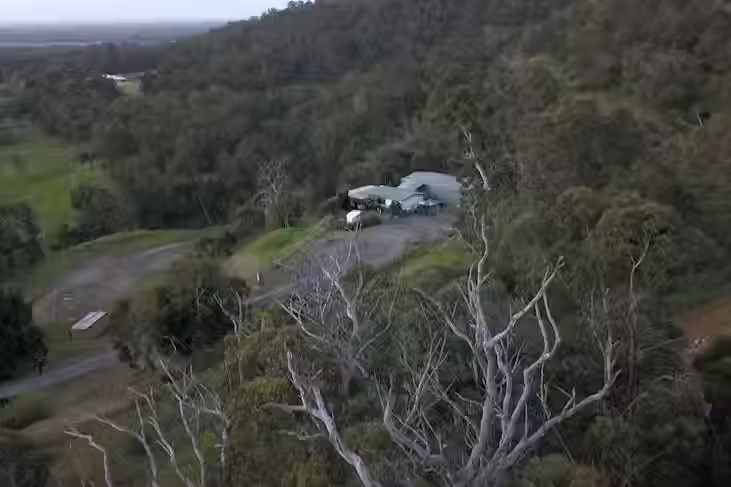
The property is quiet. The emergency lights are gone. The legal proceedings have ended.
Yet the questions remain because the evidence itself contains unresolved tensions:
a changed scene,
conflicting observations,
disputed interpretations,
limited forensic opportunity,
and final moments that cannot be fully reconstructed.
The Question That Cannot Be Answered
This article is not centred on the question “Was it suicide or homicide?”
It is centred on a different question:
What might investigators have learned if the scene had remained protected until a full forensic examination was completed?
No one can answer that now.
That is precisely why it continues to matter.

Deeper Into The Case Summary
Case: Amy Wensley
Issue examined: Post-scene investigative controversy
Key concept: Lost forensic opportunity
Established fact: The Protected Forensic Area was lifted before a full forensic examination was completed.
Unresolved issue: Whether additional forensic examination would have clarified the circumstances of Amy’s death.
Why it matters: The early handling of the scene affected the evidence available to later investigators and remains central to ongoing public debate.
Sources
ABC News. The selfie, the shotgun and a mother dead: A family’s push for answers over Amy Wensley’s death. https://www.abc.net.au/news/2022-07-04/answers-for-amy-wensley-over-mysterious-death/100631492
ABC News. Amy Wensley coronial inquest unable to confirm who fired fatal shot as questions go unanswered. https://www.abc.net.au/news/2021-10-08/amy-wensley-coronial-inquest-unable-to-say-who-fired-shotgun/100523088
ABC News. Suicide inquest hears detectives who concluded Perth woman Amy Wensley killed herself admit errors. https://www.abc.net.au/news/2021-02-10/inquest-hears-detectives-maintain-amy-wensley-killed-herself/13141694
ABC News. Jumping the Gun | Part 1. https://www.abc.net.au/news/2022-06-23/jumping-the-gun-part-1/13942766
7NEWS Spotlight. The truth about Amy: Crime scene detail blows open investigation into WA mum Amy Wensley’s death. https://7news.com.au/spotlight/7news-spotlight-the-truth-about-amy-crime-scene-detail-blows-open-investigation-into-wa-mums-amy-wensleys-death-c-15100168.amp
This article is provided for documentary and educational purposes as part of the Coffee and Crime AU Evidence Room.

